Quite agile
The mobility transition plays a decisive role in achieving the climate goals. This makes it all the more important that cyclists set off into the future well equipped. In 1953, Germany’s first youth traffic school was inaugurated at Diakonissenplatz in Stuttgart. While traffic schools used to primarily fulfill the educational objective of turning children into responsible road users, it has become crucial to design school buildings in line with sustainability considerations.


This is about motion
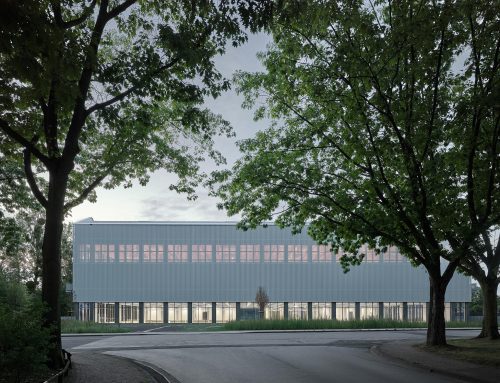
Set on the southern edge of the urban green corridor, the single-storey timber building appears almost like part of the landscape. The viewer understands immediately: This is about motion. This impression is not only created through the curved shape of the building. It is enhanced by the design of its envelope. The pre-greyed tongue and groove boards made of European larch on the facade were inclined at a 45-degree angle, adding an extra dynamic to the projections and recesses in the facade. A folded, slightly sloping, green flat roof with water storage underlines this effect. Only the passageway and the “incisions” on the north and south sides of the building stand out in bright red. They set accents and help with orientation on the site.


Everything under one green roof
In total, JVS with its almost 500 square meters of net space is divided into four sections. The bright red access road to the car parking spaces and for emergency vehicles is covered and intersects visually through the building volume. A spacious entrance with cloakrooms and seating as well as a training room and additional sanitary facilities welcome the children. The traffic police officers stationed on site have their own areas: An office, kitchenette, changing rooms and a terrace in front of the building to the south-east make for a pleasant working environment. The space allocation plan also includes operational facilities: a workshop, a warehouse, a bicycle room, a drying room for wet clothes and a medical room.

Reduced materiality with maximum effect
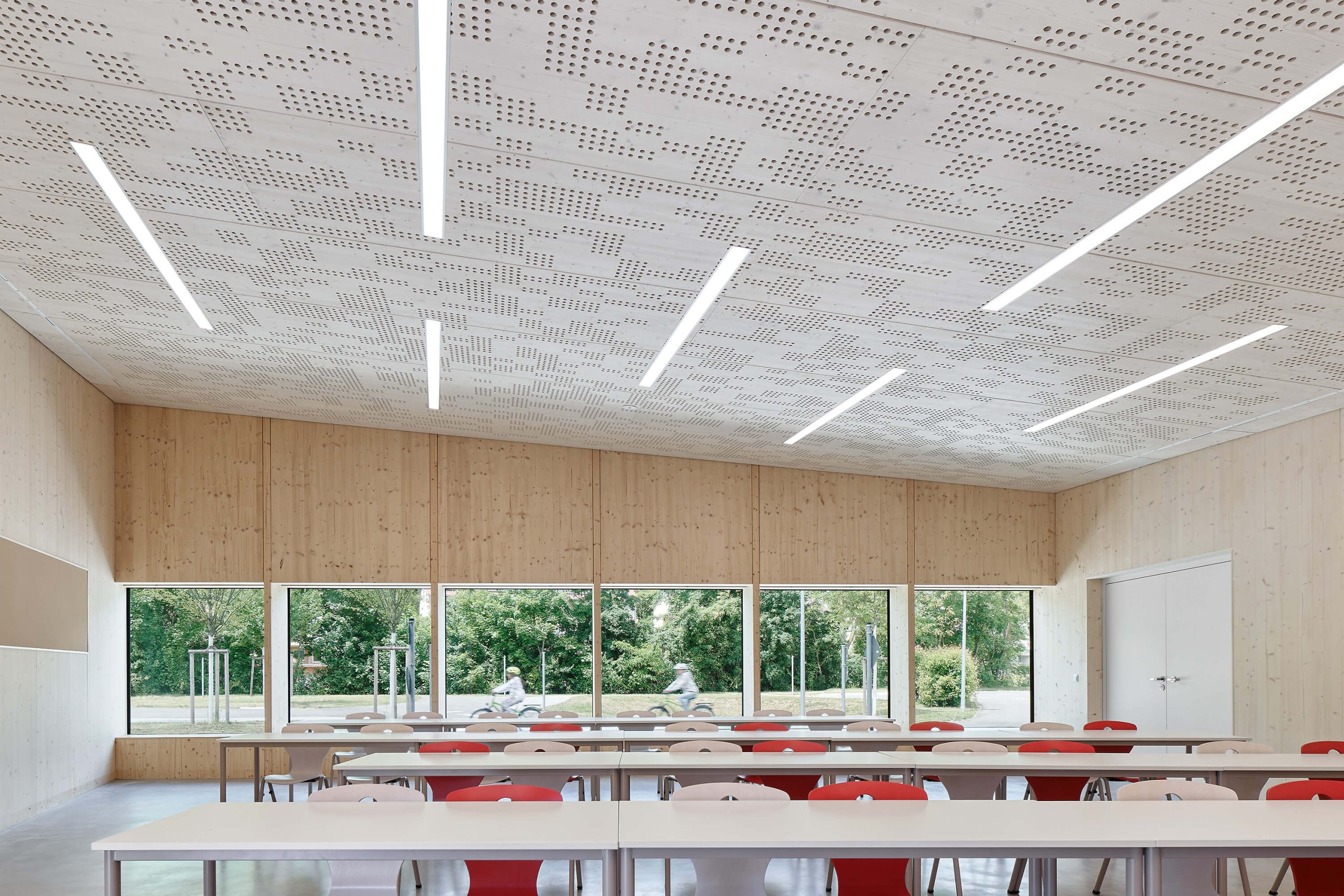
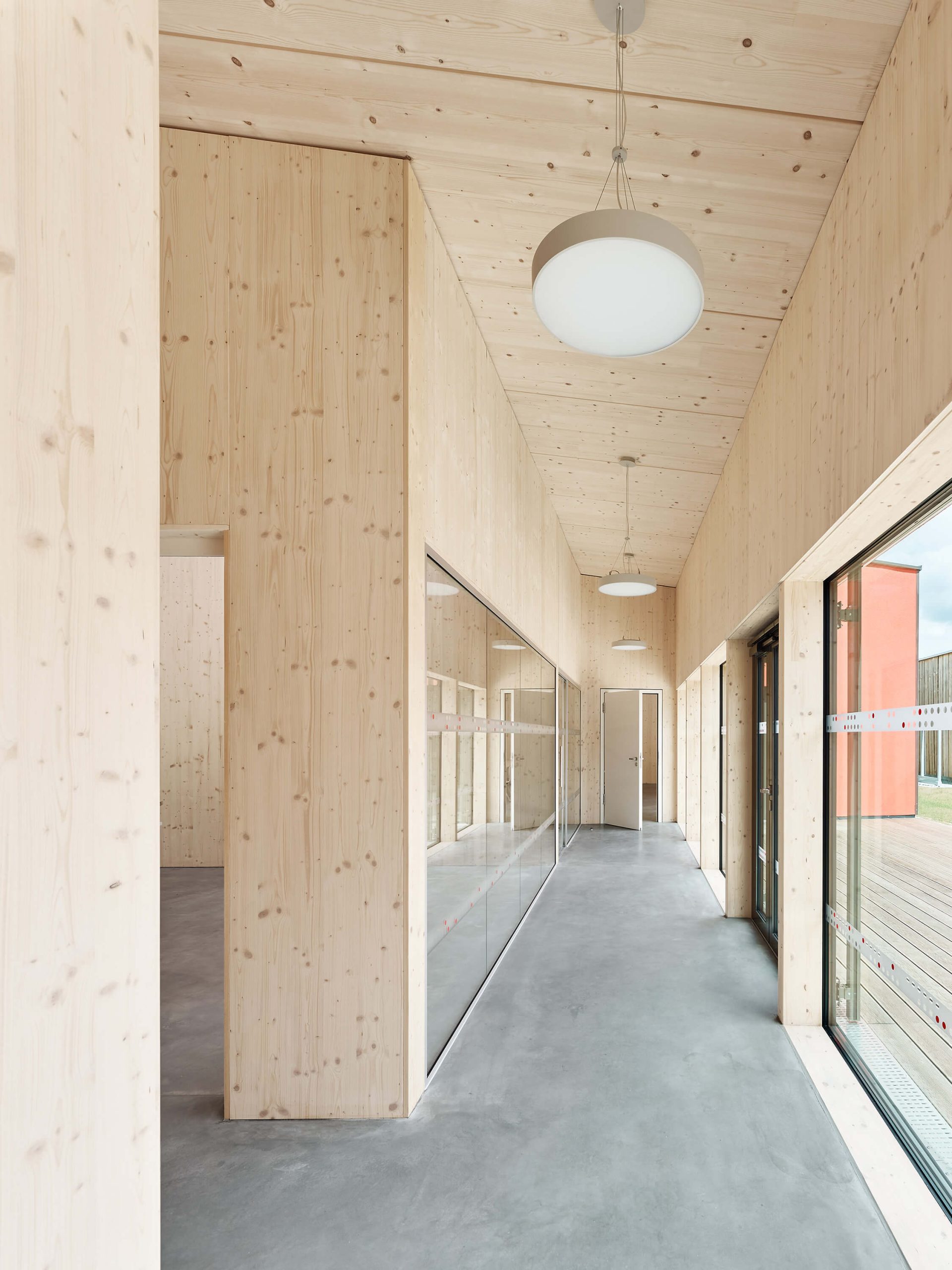
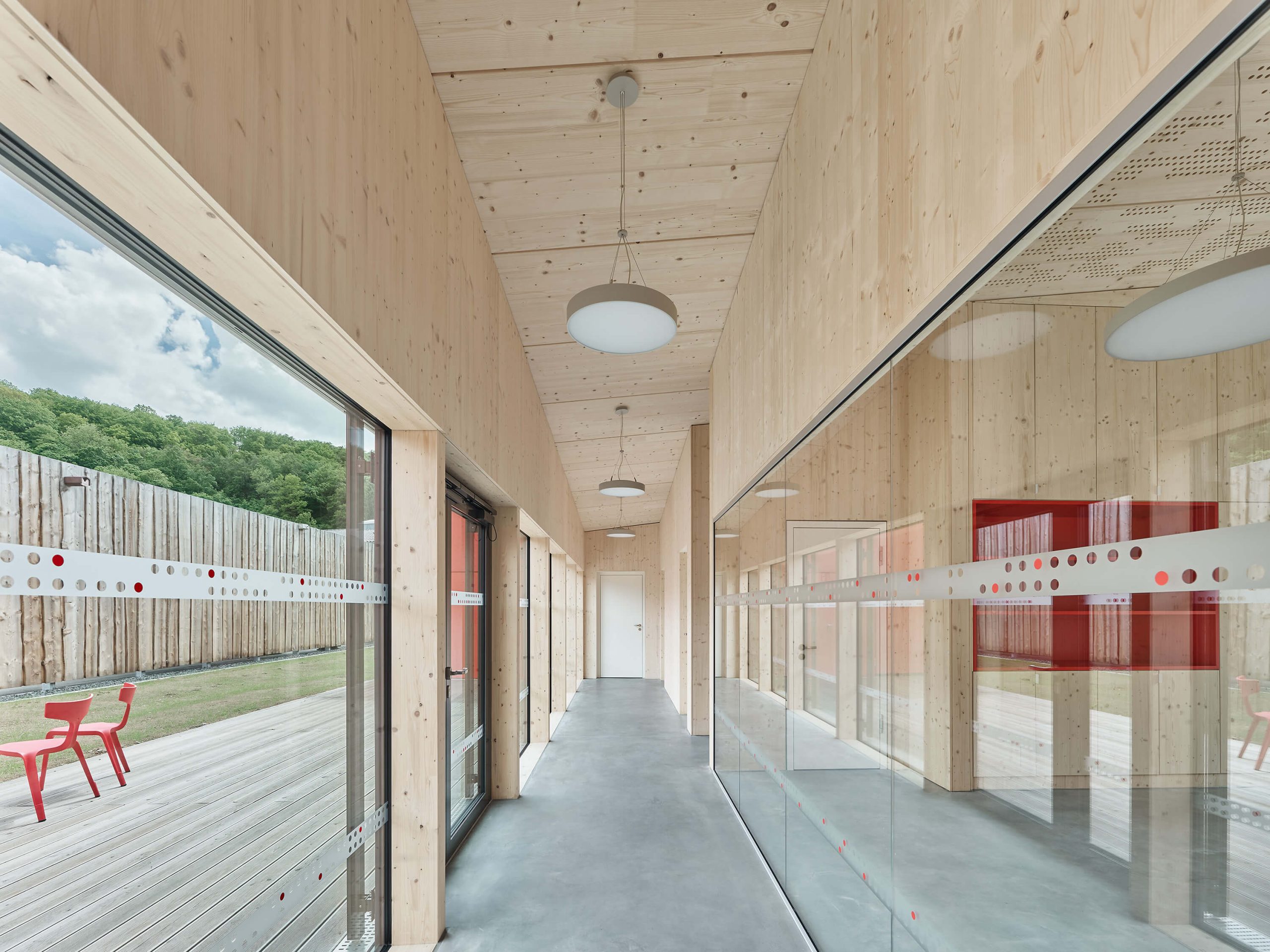
Just like in the entire building, the materiality of the interior has been designed to use resources sparingly, without neglecting the aesthetic appeal and the spatial quality. In order to create maximum effect with a minimum of resources, the materials and colour scheme are consistent, authentic and pure, on the exterior as well as the interior. The insulated reinforced concrete slab, which serves as the foundation for the entire timber construction, was simply coated with an exposed hard aggregate floor screed, sanded and oiled. The walls and hollow box ceilings were clad with panels in satin-finish oiled spruce. At the same time, the perforation in some of the walls serves as a holder for wooden pegs, which the children can use as coat hooks, for example, using a playful plug-in principle. In the interior, too, fixtures and furnishings are bright red as a counterpart to the reduced materiality of concrete and wood.


In front of the building is the dynamic, spacious bicycle course. Learners can ride the bicycles on different surfaces such as sand, gravel or cobblestones. There is a railway track that can be crossed and also signage that encourages the kids to navigate and cycle at the same time.
The youth traffic school has received the AKBW Beispielhaftes Bauen 2019-2023 award.
Project information
Projektname: Jugendverkehrsschule
Location: Stuttgart
Project type: New construction
Year: 2021
Client: Office for Real Estate and Housing, represented by the Stuttgart Building Department
Collaboration: w-hp Ingenieure (structural engineering), HE plantechnik GmbH (TGA planning / electrical planning)
Team: Daniela Boog, Sabrina Bauer
Images: Zooey Braun / Aerial photo: Achim Birnbaum
Awards: Bespielhaftes Bauen Stuttgart 2019-2023