A building with a special identity for the fan culture
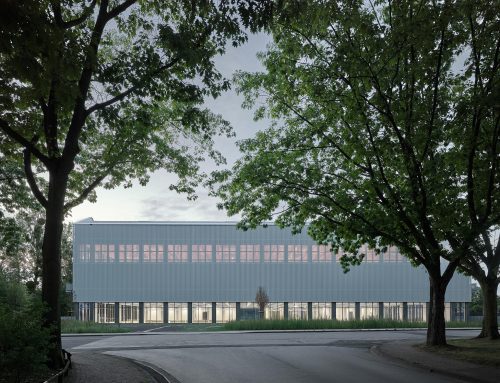
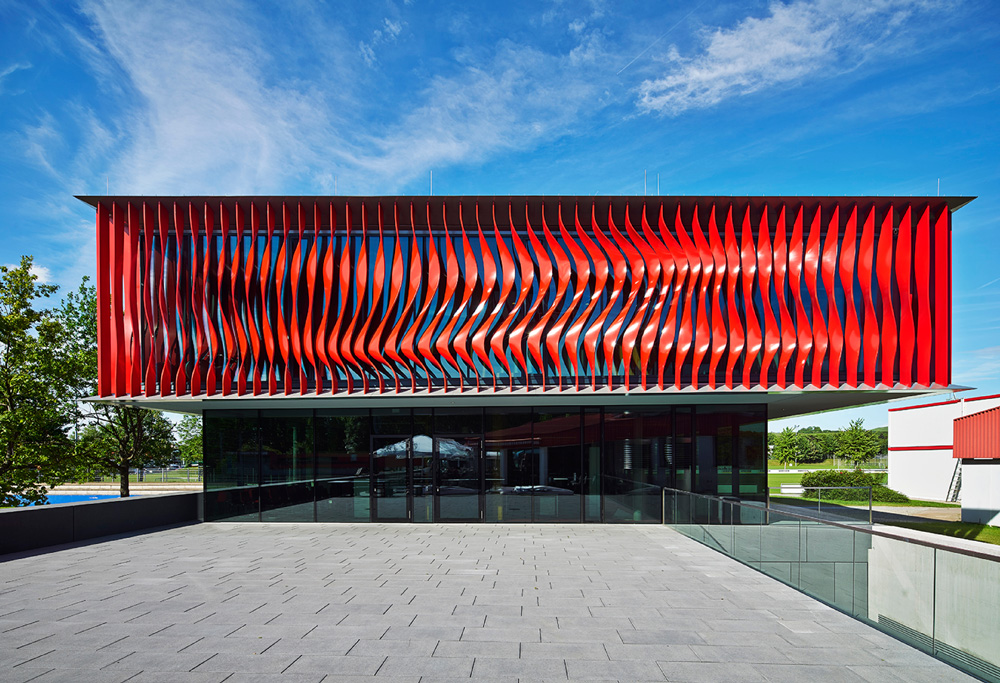
This comparatively small building for VfB Stuttgart football club, which is visible from afar thanks to its bright red, dynamically shaped shell, was built in the vicinity of the large solitary structures of the stadium and the Mercedes-Benz Museum. The starting point for the project was the club’s desire to improve the spatial situation and expand the facilities for the youth teams and the VfB second team.

Motion and momentum
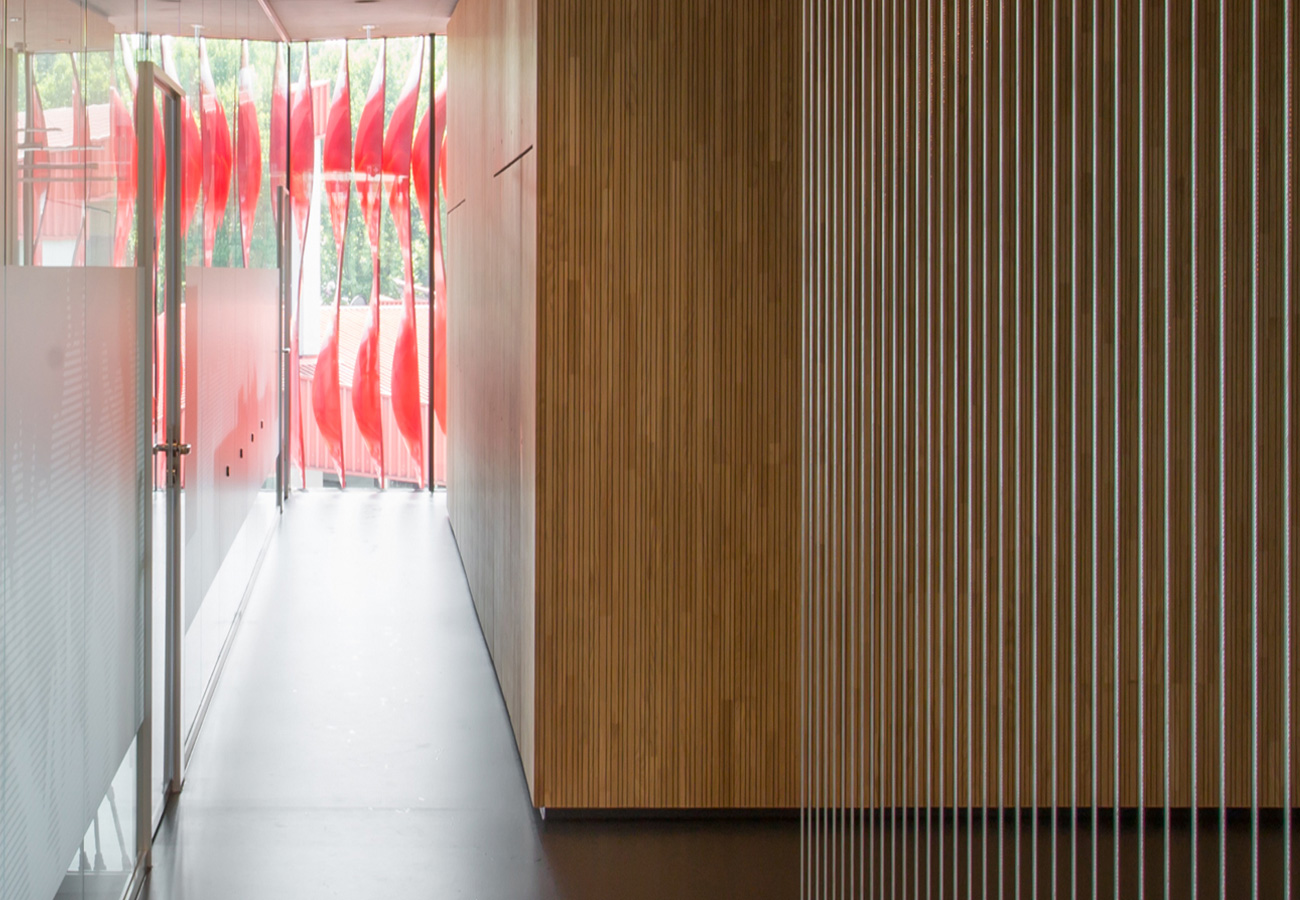
The red lamellae on the upper floor take up the façade motif of the existing building and transform it into a three-dimensional, semi-transparent structure. Viewed from the inside and outside, this structure changes depending on the observer’s point of view and sometimes appears open, sometimes closed. The fluid transitions of the louvres depict sequences of athletes’ movements and create a momentum that refers to the function of the building. The elements serve as visual and sun protection and the overall design echoes the characteristic red chest ring of the club jersey.
Floorplan and spatial structure
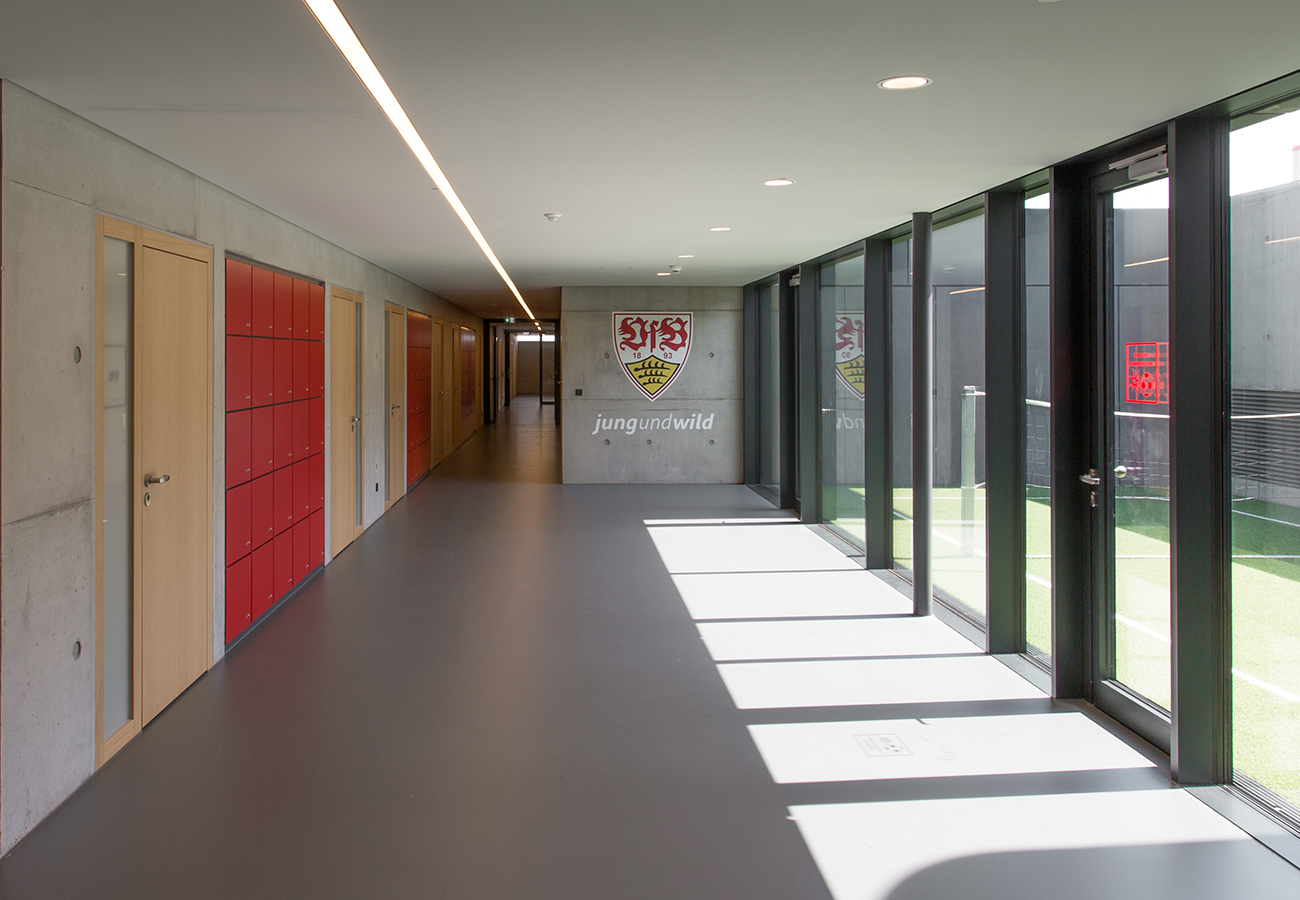
The building is divided into three parts: The basement of the existing building is incorporated into the new building and emphasised as an independent body in the plinth. Its function is to create a divide between the public areas and those used internally by VfB. Access to the athletes’ area with changing rooms for visiting teams, youth teams, VfB II, coaches and referees is via the pavilion building to the south. A sunken courtyard with a football pitch opens up in the centre and provides natural lighting for the corridor areas in the basement. This is where the connection to the old clubhouse is located. In the patio, the atrium also creates a natural partition between the public area and the club grounds.
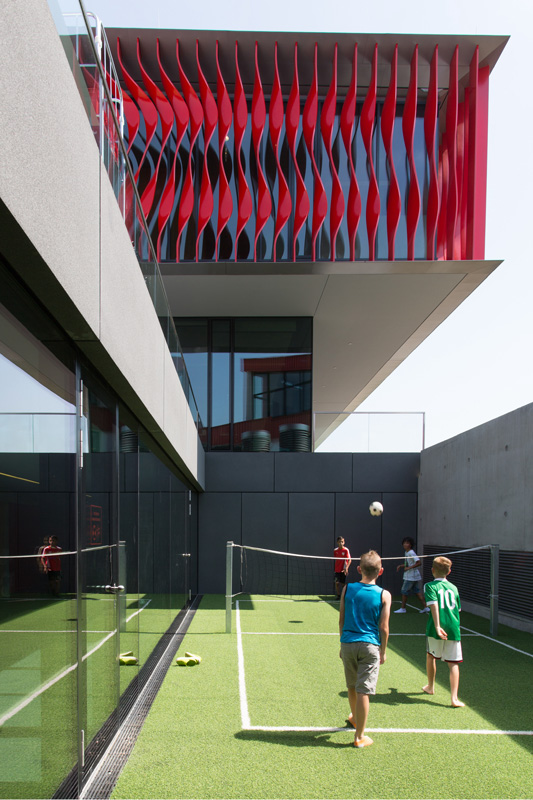

The newly created space above the basement serves as a “grandstand” facing the neighbouring Schlienz Stadium and as a terrace for the club restaurant. The recessed, transparent volume of the ground floor with reception, trainer offices, meeting and training rooms rests on the solid plinth. The upper storey is designed as a cantilevered component. On three sides it is flush with the outer contours of the plinth. The weight and gymnastics rooms, sauna and spa areas as well as doctors’ and physiotherapy facilities are housed behind the likewise fully glazed volume. All loads on the upper floor are transferred via filigree tension cables to the roof and further into the core area of the building, creating highly adaptable, column-free spaces.
The house is supplied with electricity and heat via a CHP unit with combined heat and power generation and is cooled in summer via the component activation of the concrete ceilings. The grass heating of the neighboring training pitches is used to produce hot water in summer.
Project information
Name: VfB youth training centre
Project type: New construction
Location: Stuttgart
Client: VfB Stuttgart 1893 e.V.
Completion: 2014
Planning partner: schlaich bergermann partner sbp GmBH (structural engineering), EGS Plan GmbH (energy engineering), IB Wörtz (HVAC, electrical engineering, sanitary)
Project team: Attila Acs, Eberhard Becker (project management), Daniela Gröner, Jörg Vees
Images: Swen Carlin, Oliver Rieger, Attila Acs